

Iridology is often described as a window into the body’s inner landscape—a gentle, non-invasive approach that seeks to understand overall wellness by studying the intricate patterns of the iris. Practitioners believe (and see) that the eye, with its delicate fibers, colors, and markings, reflects changes occurring throughout the body. When you look into what it can show and the accuracy of the results you will know it is not just a complementary practice, but it might not be a replacement for medical diagnosis. It is a good supplement to any medical diagnosis. Many people are drawn to it for its holistic perspective and preventive focus.
One of the most appreciated benefits of iridology is its non-invasive nature. Unlike many medical procedures that require needles, blood tests, or imaging, iridology involves simply observing the eye with a magnifying lens or specialized camera. This makes the process comfortable and stress-free. For individuals who are sensitive to medical procedures or who prefer natural approaches, this can feel empowering and reassuring.
Another benefit lies in early awareness. Iridologists often emphasize that changes in the iris may indicate areas of weakness or stress in the body before symptoms become pronounced. These indications often align with conventional medical findings; many clients report that the consultation encourages them to pay closer attention to their health habits. In this way, iridology can serve as a catalyst for preventive care—motivating improvements in nutrition, hydration, sleep, and stress management.
A central concept in iridology is the idea of toxemia—the accumulation of toxins in the body—which many holistic practitioners view as a root cause of illness. According to iridology philosophy, certain discolorations, spots, or fiber patterns in the iris may suggest toxic buildup or congestion within specific organs or systems. The perceived benefit of identifying toxemia through iris analysis is that it encourages individuals to address underlying imbalances rather than merely suppressing symptoms.
When clients are informed that their bodies may be showing signs of toxic stress, it often inspires proactive lifestyle changes. These may include adopting a cleaner diet rich in whole foods, increasing water intake, supporting elimination pathways through improved digestion, incorporating gentle detoxification practices, and reducing exposure to environmental toxins. In this narrative, iridology becomes not only a tool for observation but a guide toward internal cleansing and restoration.
Additionally, the emphasis on toxemia reinforces the holistic principle that health is maintained through balance and proper elimination. Rather than focusing solely on disease labels, the iridology perspective encourages strengthening the body’s natural detoxification systems—such as the liver, kidneys, lymphatic system, and colon. Clients often feel empowered by the idea that by reducing toxic load, they can improve energy levels, mental clarity, immune resilience, and overall vitality.
Iridology is also valued for its whole-person viewpoint. Practitioners often explore digestion, circulation, nervous system balance, and emotional well-being in relation to what is observed in the iris. This broader discussion can help individuals feel heard and understood beyond a narrow set of complaints. The consultation itself may offer clarity, validation, and renewed commitment to wellness goals.
It is important to note that iridology and the concept of toxemia as a root cause of disease are not scientifically validated within mainstream medicine.
So, if the medical establishment does not accept then it must not be true. Right?
BALONEY! !!!
Many who seek IRIDOLOGY appreciate its preventive philosophy, its emphasis on lifestyle responsibility, and its focus on addressing potential underlying imbalances rather than simply managing symptoms.
Iridology continues to attract those who desire a deeper understanding of their bodies and who value a holistic approach to supporting long-term wellness.
IRIDOLOGY
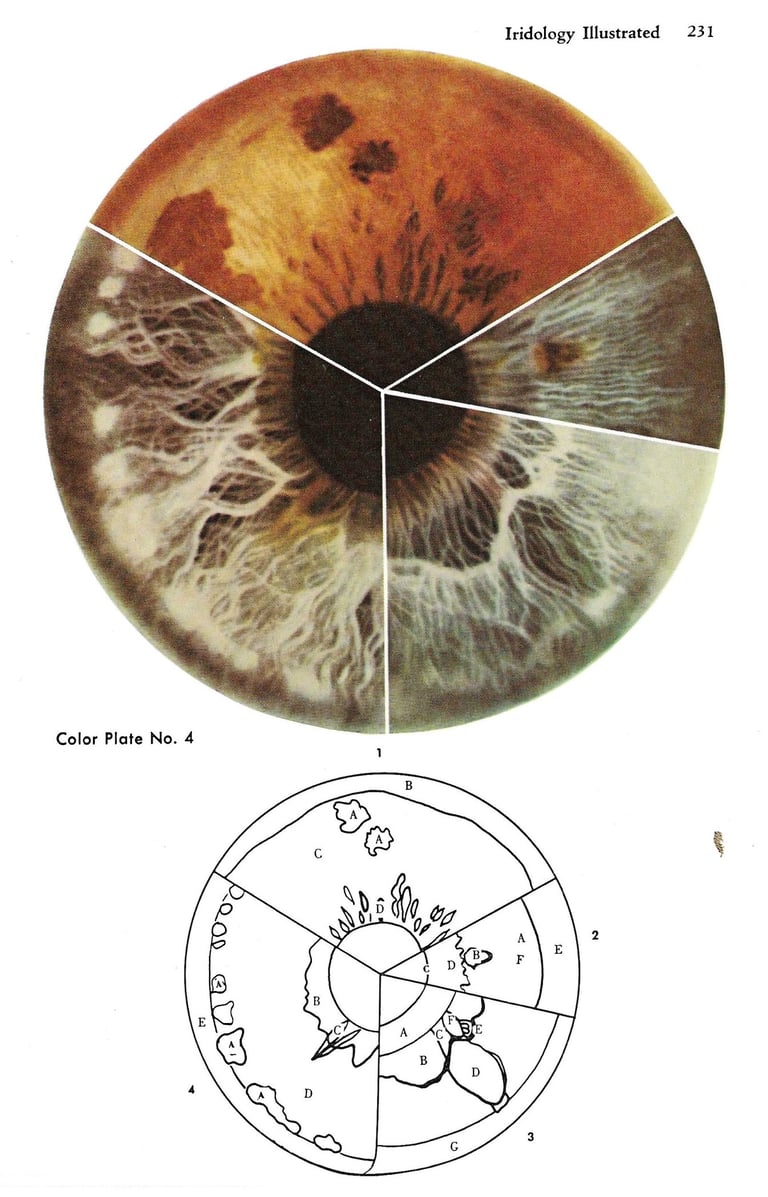
Dr. Bernard Jensen D.C. N.D has studied this extensively. There is an image of an iris (see below) and the "diagnosis" described in detail by Dr. Jensen. The image and the description are from his book:
The Science and Practice of Iridology
Printed in 1974 (4th Printing)


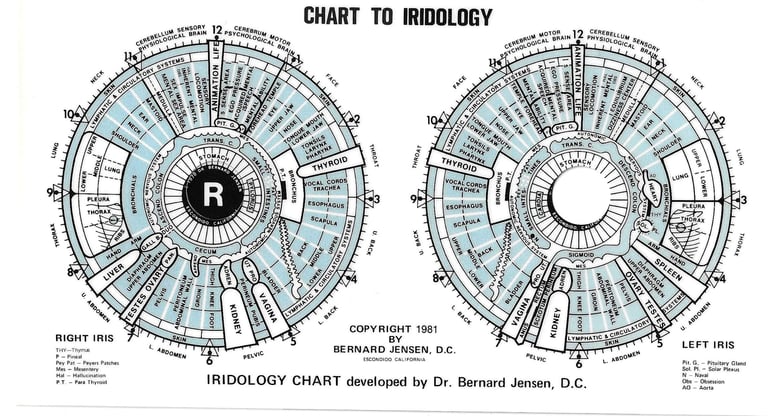
Iridology Chart Developed by Dr Jensen
With this chart and the image of the eye he describes his diagnosis...

©2019- 2026. Time-4-Truth
FACTS are stubborn things, and whatever may be our wishes, inclinations, or dictates of our passions.
They CANNOT ALTER the State of FACTS and Evidence.
John Adams (Second President of the UNITED STATES)